circuitquest.dev

  • Home
  • Woods Essays
  • Bible Readings
  • About
  • Contact

Woods Essay Week 7

November 21, 2025 by Joseph Lemke Leave a Comment

What does the fate of Medea and of those who mistreat and oppress her say to its own time?
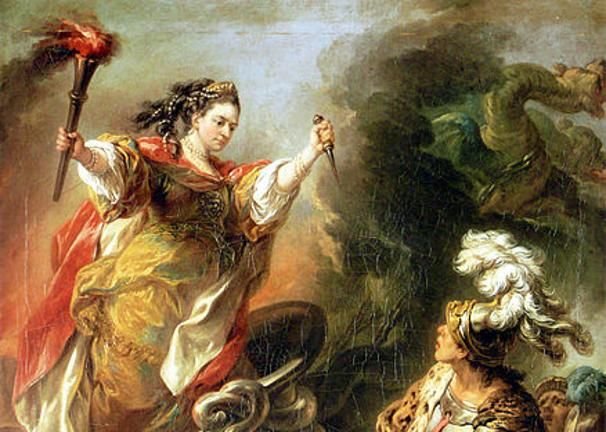
Medea is an ancient Greek play written by the playwright Euripides and was first performed in 431 BC. The play premiered during a pivotal moment in Greek history: the outbreak of the Peloponnesian War, a conflict between Athens—then at the height of its imperial power—and Sparta and its allies. Because of this timing, historians often interpret Medea as reflecting anxieties about imperialism, justice, and the treatment of foreigners within the Athenian empire.

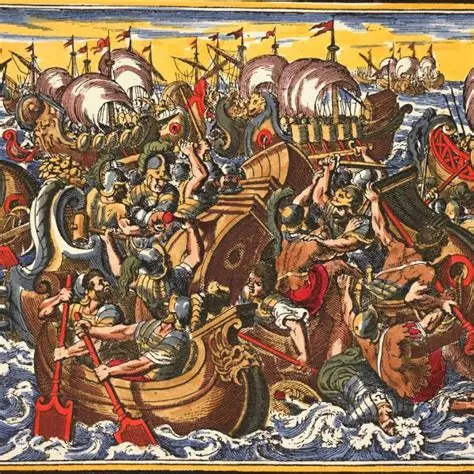
In 431 BC, Athens controlled a wide-ranging maritime empire and dominated numerous allied states through military force. While Athenians celebrated democracy at home, many subject states viewed Athens as authoritarian.
Filed Under: Woods Essay

Woods Essay Week 6

November 12, 2025 by Joseph Lemke Leave a Comment

Why was the Peloponnesian War fought? What was its long-term significance? and What points is Pericles trying to make about Athens in his Funeral Oration?

The Peloponnesian War was fought because, after the Persian Wars, Athens became powerful, using its navy to dominate its allies and build an empire. Sparta, fearing Athens’ growing influence, eventually decided to go to war.

The war ended with Sparta’s victory, but all of Greece was left weakened. It destroyed Athenian naval dominance, drained resources, and shattered unity among the Greek city-states.

In Pericles’ Funeral Oration, he praises Athens and its citizens. His speech serves as both a eulogy for the fallen and a celebration of Athenian democracy.

Some key points Pericles makes include:

  • Athens is a model city, admired by others.
  • Athens is a democracy, giving power to the people.
  • Athenians advance based on ability and merit, not birth or social rank.

Filed Under: Woods Essay

Woods Essay Week 5

November 7, 2025 by Joseph Lemke Leave a Comment

Aristotle’s Ethics explains how to live a good and fulfilling life. For Aristotle, the ultimate goal of life is happiness. This happiness is not just about feeling good, but about living well by becoming the best version of yourself. He argues that happiness comes from practicing virtue—good character traits such as courage, honesty, and generosity. Virtue, for Aristotle, is a balance between extremes, known as the Golden Mean. For example, courage is the balance between cowardice and recklessness.

Filed Under: Woods Essay

Woods Essay Week 4

October 31, 2025 by Joseph Lemke Leave a Comment

My Opinion on:

1. What was the disagreement Socrates had with the Sophists?

2. What was Plato’s point in his allegory of the cave?

The Allegory of the Cave is a theory that if a group of people were chained from birth facing a cave wall, and the only thing they ever saw of the outside world were shadows projected onto it, they would believe that those shadows were the entire reality.
Plato’s point in the Allegory of the Cave was that most people believe only what they see. If someone has seen nothing but shadows their entire life, they will believe that shadows are all that exist.

The disagreement Socrates had with the Sophists was that the Sophists believed truth is relative and that persuasion is most important, while Socrates believed truth is absolute, can be discovered through reason, and that knowledge should aim toward improvement and wisdom.

Filed Under: Woods Essay

Woods Essay Week 3

October 3, 2025 by Joseph Lemke Leave a Comment

My opinion of if the Cyclopes Have a Civilization According to Homer’s description of the Cyclopes in Book 9 of The Odyssey, and What Happens Between the Cyclops and Odysseus and His Men.

In my view, the Cyclopes cannot be considered a true civilization. Each Cyclops lives in isolation rather than as part of a community, and they lack the basic structures that define organized societies, such as laws, shared governance, and agriculture

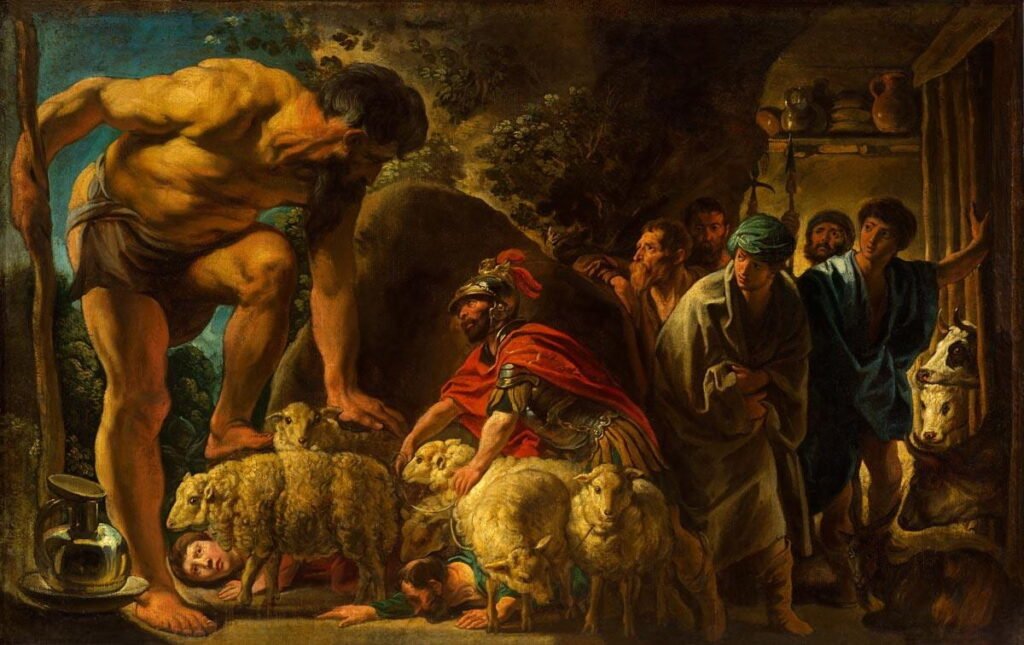
Odysseus and his men discover an island and decide to explore. They find a cave that appears to be inhabited and wait for its owner, who turns out to be a Cyclops. When the Cyclops finds Odysseus and his men, he rolls a massive stone across the entrance to trap them inside and proceeds to eat two of the men. That night he goes to sleep, and the next morning he eats two more men before letting his sheep out to graze, rolling the stone back in place behind him. Odysseus devises a plan to escape: when the giant returns, he introduces himself as “Nobody” and offers the Cyclops wine. The giant drinks the wine, becomes drunk, and falls asleep. Odysseus then sharpens a stick, hardens it in the fire, and plunges it into the Cyclops’ eye. The blinded giant cries out, “Help! Nobody is attacking me!” so the other Cyclopes ignore him. In the morning, as the Cyclops lets his sheep out, Odysseus and his men hide underneath them and escape. Once they reach their ship, Odysseus, overcome with pride, reveals his true name, prompting the Cyclops to call upon Poseidon to curse him and his men.

Filed Under: Woods Essay

  • « Previous Page
  • 1
  • 2
  • 3
  • 4
  • Next Page »

Recent Posts

  • Woods Essay Week 17
  • Bible Reading 3/16/26
  • Woods Essay Week 16
  • Woods Week 15
  • Bible Reading 2/20/26

Recent Comments

  1. A WordPress Commenter on Woods Essay Week 1

Archives

  • March 2026
  • February 2026
  • January 2026
  • December 2025
  • November 2025
  • October 2025
  • September 2025

Categories

  • Bible Reading
  • Woods Essay
  • Home
  • About
  • Contact

Copyright © 2026 · Enterprise Pro on Genesis Framework · WordPress · Log in