- Woods Week 36
(1) What do you think is the central point of the essay you read by Mario Vargas Llosa?
I think the central point was the use of literature as an instrument of freedom. Vargas frequently argues that literature is essential for a free society because it starts critical thinking, exposes the flaws of authoritarianism, and also creates a healthy dissatisfaction with reality.
(2) What is the truth of the matter regarding the claim that people in the Middle Ages thought the earth was flat?
The belief that people thought that the earth was flat in the middle ages is a modern myth. Educated people through the Middle Ages knew that the earth was spherical. Greek philosophers such as Aristotle established the spherical model of the earth. The myth was started in the 19th century by writers like Washington Irving and anti-religious historians who sought to portray the Middle Ages as an era of blind faith and ignorance compared to modern scientific enlightenment.
- Woods Week 35
(1) How were the ideas of Marsilius of Padua evident in Louis of Bavaria’s conflict with Pope John XXII?
Marsilius wrote the Defensor Pacis in 1324, which argued that supreme authority in both church and state rests with the people, not the pope. He said that the papacy should have no temporal jurisdiction and that the pope should be subject to a general council of the Church. Louis IV applied these when he clashed with Pope John XXII over imperial election rights, Louis put Marsilus’s theories into practice. Louis ignored his papal excommunication, marched into Rome in 1328, and had himself crowned Emperor.
(2) What can we say about the condition of the Catholic Church on the eve of the Protestant Reformation?
On the eve of the Protestant Reformation, the Catholic Church presented a paradoxical picture of widespread institutional corruption. There was institutional weakness where high level offices were plagued by absentees, people holding multiple church offices at once, and financial abuses. Lower clergy were also commonly poorly educated, impoverished, and unable to properly instruct parishioners in Latin liturgy.
(3) Discuss the three key developments in the process of political centralization in Spain.
One of the three key developments in the process of political centralization in Spain was the marriage of Ferdinand and Isabella in 1469. The union of Isabella I of Castile and Ferdinand II of Aragon united the two largest kingdoms on the Iberian Peninsula, laying the groundwork for a united Spanish state. The second key development is the completion of the Reconquista in 1492. The fall of Granada ended over 700 years of Muslim rule in the region, which gave the geographical and political control over to the Catholic Monarchs. The third and final key development is the Religious and Administrative Uniformity. The establishment of the Spanish Inqusition in 1478 enforced strict religious orthodoxy, using faith as an instrument of state authority, and removing non-christian minorities.
- Woods Week 34
week 34
(1) Discuss the rise and fall of Girolamo Savonarola.
Girolamo Savonarola was a Dominican friar who gained immense popularity in Florence during the 1490’s. He delivered apocalyptic sermons denouncing the corruption of the clergy and the secular moral decline under the Medici family. Savonarola started to decline because of his extreme measures, economic hardship, and fierce attacks on Pope Alexander VI. He was excommunicated, and in 1498 he was arrested, tortured, convicted of heresy and executed by hanging and burning.
(2) Discuss the Italian War of 1494-1498.
The war of 1494-1498 was started when Charles VIII of France invaded Italy in 1494 to assert a dynastic claim over the kingdom of Naples. Charles VIII marched through Italy with a formidable army and heavy artillery, taking Naples with minimal resistance in early 1495. Italy panicked because of French power. Major Italian states allied with Spain and the Holy Roman Empire to form the league of Venice. The League of Venice cut off Charles VIII’s army as he retreated north at the battle of Fornovo. While Charles escaped back to France, his remaining garrisons in Naples were quickly defeated.
(3) Discuss some of the significant aspects of the reign of Louis XI.
Louis XI ruled France from 1461 to 1483 and played a crucial part in laying the foundation of absolute monarchy. He helped centralize royal power, where he systematically tore down the power of rebellious feudal lords, centralizing power around the French crown. Another significant aspect of Louis XI’s reign was how he defeated Burgundy. Charles the Bold was the Duke of Burgundy, and after Charles died at the battle of Nancy in 1477, Louis annexed major parts of Burgundy into France.
- Woods Week 33
week 33
(1) What were some of the problems associated with the Renaissance papacy?
Some of the problems that were associated with the Renaissance papacy were corruption and nepotism. Popes such as Alexander VI used their position to secure wealth, land, and power for their family members. Another problem is simony and sale of indulgences, where spiritual favors and church offices were frequently bought and sold to finance lavish art, architecture, and military campaigns. Moral laxity was another issue, where many popes and high clergy lived openly lavish lifestyles, fathered illegitimate children, and ignored traditional vows of asceticism.
(3) We normally think of three people in particular as having been the key artists of the High Renaissance. Who were they? Discuss one major work from each.
Leonardo da Vinci is one of the most popular Renaissance artists, making art such as the Vitruvian Man. He was also an engineer, making very popular inventions such as the aerial screw, and other inventions attempting to make man fly.
Michelangelo is another very popular Renaissance artist, making many famous sculptures such as the collection of sculptures of Madonna and child, and the painting of the Sistine Chapel ceiling.
The third key artist is Raphael, who is famous for his smooth style, perfect balance, and mastery of perspective. One of his biggest works is The School of Athens, a huge painting on a Vatican wall that shows all the top ancient Greek philosophers and scientists hanging out together.
- Woods Week 32
(1) What are some of the qualities and strategies Machiavelli recommends to political leaders in the excerpts you read? How does this represent a break with the past?
One of the qualities Machiavelli recommended is that a ruler must focus on what is rather than what should be. A prince must posses virtue which to Machiavelli meant political skill, adaptability, and decisiveness, rather that moral goodness. A strategy that Machiavelli employed was that it is better to be feared than loved. Machiavelli writes that if a leader cannot both be loved and feared, it is far safer to be feared rather than loved. Love is fickle and based on obligation, while fear is sustained by the dread of punishment. However he emphasizes that a prince must avoid being hated, which leads to rebellion.(2) Briefly discuss three artists from the early Renaissance (in other words, people from lessons 158 and 159) as well as one major work for each.
The first of the three early Renaissance artists is Filippo Brunelleschi. Brunelleschi was a master architect and engineer who formally rediscovered the mathematical rules of linear perspective. His greatest achievement was designing and engineering the monumental dome of the Florence Cathedral, solving a massive structural challenge by using a double-shell construction without relying on traditional wooden scaffolding. the second of the three early Renaissance artists is Donatello. Donatello revolutionized European sculpture by creating the first freestanding life-sized n*de sculptures since Classical antiquity. He also reintroduced Classical techniques such as contrapposto, the natural posture where weight is shifted onto one leg. The final of the three early Renaissance artists is Masaccio. Masaccio was a pioneer of early Renaissance painting. In The Holy Trinity, he was among the first to successfully apply mathematical linear perspective in painting, creating the optical illusion of a deep three-dimensional recessed chapel on a flat wall. - Woods Week 31
(1) Discuss some of the key ideas of the Renaissance.
One of the key ideas from the Renaissance was humanism. The central intellectual movement of the Renaissance, which shifted focus toward the human experience, individual potential, and classical learning. Humanists emphasized the study of liberal arts. Another key idea is Classicism, a renewed interest in the literature, art, philosophy, and architecture of Ancient Greece and Rome. Thinkers sought to recover and restore Classical texts to reform society. Secularism was another key idea of the Renaissance. While society remained deeply religious, there was a noticeable shift toward valuing worldly life and earthly achievements.(2) In what ways does Petrarch embody the spirit of the Renaissance?
Petrarch was instrumental in initiating the Renaissance by advocating for the recovery and revival of forgotten Greek and Roman texts and hunting down lost manuscripts in monastic libraries. Another way that Petrarch embodied the Renaissance was bridging the Classical and the Christian. He sought to reconcile Classical pagan philosophy with christian theology, arguing that human potential and intellect were gifts from God meant to be developed. - Woods Week 30
(1) Who was John Wycliffe?
John Wycliffe was an early reformer and theologian, as well as a critic of papal wealth and authority. John was an English scholastic philosopher, theologian, and a priest who taught at the University of Oxford. He argued that the church had grown corrupt and wealthy, asserting that secular rulers had the right to seize church property if the clergy misused it. Wycliffe believed that the Bible, not the pope, was the ultimate spiritual authority. He directed the translation of the Bible from Latin into Middle English, so that ordinary people could read it.(2) What were the causes and consequences of the Hundred Years’ War?
One of the causes of the Hundred Years War was feudal and territorial disputes. The kings of England held lands in France as vassals to the French king, creating constant tension. Another factor was the Dynastic Succession. When French King Charles IV died without a male heir in 1328, King Edward III of England claimed the french throne through his mother, Isabella. French nobles rejected his claim, choosing Philip VI instead. One of the consequences of the Hundred Years War was the rise of nationalism. Both England and France developed strong national identities separate from feudal loyalties. Military revolution was another consequence of the war. The reliance on knightly Calvary waned with the rise of infantry, longbowmen, and early gunpowder weapons. - Woods Week 29
(1) What was the significance of the conflict between Philip IV and Boniface VIII?
The conflitct between King Philip IV and Boniface VIII started when King Philip of France sought to tax the clergy to fund military operations. Pope Boniface stronly opposed this, issuing papal bills, most notably Unam Sancatam which asserted that spiritual power held supreme authority over all secular rulers. The conflict continued when Philip rejected papal supremacy, sending forces to arrest the pope. Though the pope was quickly rescued, he died shortly after from the trauma, signaling a victory for royal power.(3) Based on the video and on your reading, what were the effects on Europe of the Black Death?
The effects of Black Death on Europe were devastating, killing up to 60% of the entire population, leading to severe depopulation across urban and rural regions. With a vast decrease in the workforce, surviving peasants gained significant bargaining power, as able workers were rare. The peasants demanded higher wages and lower rents. The traditional feudal system weakened as land values dropped and peasants gained mobility. - Woods Week 28
Based on the video lessons and your reading, what were the reasons behind the conflicts between the emperors and the popes during this period?
A major reason behind the conflict was papal supremacy. Popes claimed absolute authority over both spiritual and temporal affairs. They argued that because spiritual salvation is superior to earthly existence, kings and emporors must be subordinate to the pope, who held the power to crown or depose secular rulers. Another reason is the papacy ruled central italy as a territorial kingdom. Any attempt by the holy roman empire to consolidate power in Italy was viewed by popes as a direct threat to the papal state’s sovereignty. Because church officials held vast lands, collected taxes, and commanded feudal armies, controlling ecclesiastical appointments meant controlling immense wealth and political power.
- Woods Week 27
(2) Why was the rise of the medieval towns significant?
The resurgence and growth of medieval towns starting around the 11th century marked a profound structural shift in European history, transitioning society away from rigid feudalism toward modern economic and political systems. One of these shifts was a shift to a money based economy, where towns replaced self-sufficient agricultural manors with market economies. Another shift was the rise of the middle class, a new social class of merchants, artisans, and craftspeople. They held wealth based on capital rather than land ownership, disrupting the traditional feudal hierarchy of noble lords, and serfs.(3) How can we account for western Europe’s sustained economic success?
Western Europe’s long term economic rise was not driven by a single factor, but rather by a combination of agricultural, institutional, geographical, and technological catalysts. Some agricultural innovations such as the heavy iron plow, the three field crop rotation system, and the widespread use of horses equipped with padded collars created massive food surpluses. Another breakthrough was the institutional and property rights development. The breakdown of feudalism led to legal protections for private property, enforceability of commercial contracts, and rule of law. - Woods Week 26
(3) Describe the main principles of just-war theory.
One of the main principles of the just war theory is that before a country can morally go to conflict, they first must fulfill several criteria. One criteria is having a just cause; Force may only be used to correct a grave public evil, such as self defense against aggression, or protecting innocent life. Another criteria is the competent authority, where war can only be initialized by a well known public authority, not your random joe. Another criteria is the right intention for the war. The ultimate objective of the war must be to re-establish a just peace.
(4) In what fundamental way did Duns Scotus and William of Ockham challenge the position of Thomas Aquinas?
The fundamental way Duns Sotus and William of Ockham challenged the position of Thomas Aquinas was that Thomas Aquinas believed God’s intellect is primary, whereas they believed that God’s will was primary, because if you focused on his intelligence that would limit his omnipotence. Another way they challenged Aquinas was that he believed in Aristotle’s theology that “universals” (concepts like “whiteness”) have a real objective existence outside of the mind, embedded in individual things. Sotus and Ockham introduced the concept of “thisness”, shifting focus toward the unique individuality of things. - Woods Essay Week 25
Answer three of the following questions:
(1) What kinds of developments occurred during the renaissance of the twelfth century?
One of the developments was the translation movement, where Western scholars rediscovered long lost Greek and Arabic texts, particularly the works of Aristotle, Ptolemy, Euclid and Islamic philosophers like Averroes. Another development was the birth of Scholasticism, which was a new philosophical method which sought to harmonize Christian theology with classical reason and logic, altering how theology and philosophy were studied.(2) Discuss the origins and features of the university system in the High Middle Ages.
One of the origins of the medieval universities was the Bologna model which operated in Italy, where the students hired and paid the professors, setting the rules for the curriculum. Another origin is the Paris model, where the corporation of teachers ran the institution and dictated the rules.(4) Write a brief overview of the life and work of Thomas Aquinas.
St. Thomas Aquinas was an Italian Dominican friar, philosopher, and theologian. He was widely regarded as the greatest intellectual heavyweight of high Scholasticism. He was born to an Italian noble family, where he shocked his relitives by choosing to join the Dominican Order, which was a new Mendicant order of beggars. He went on to study under Albert the Great in Paris and Cologne. - Woods Essay Week 24
Writing Assignment: Answer three of the following questions:
(1) What did the Albigensians believe?
The Albigensians had a core belief that there were two opposing gods, a good god (who created the spiritual realm) and a bad god (who created the material world). Because they viewed the material world as corrupted, they believed that human souls were spirits trapped in inherently sinful flesh.(2) Describe the mendicant orders of the thirteenth century.
The Mendicant orders were Catholic religous orders founded in the early 13th century that revolutionized the traditional monastic lifestyle. Unlike traditional monks who lived in isolation, mendicants rook strict vows of absolute poverty, where they refused to own property or land. Another difference is that instead of retreating from society, mendicants lived as friars in major cities and towns. Their view was “not to live for themselves but to serve others.” They relied entirely on the charity and goodwill of the people they served, begging for food and shelter.(3) What was the significance of the Magna Carta?
The Magna Carta is a charter of rights agreed to by King John of England in 1215. It was initially drafted as a peace treaty to settle a rebellion by his barons and bishops over heavy taxation and royal overreach. It established the legal principal that no one is above the law, not even the king. Prior to the Magna Carta, the king’s word was absolute, but the charter bound the crown to govern within established legal boundaries. - Woods Essay Week 23
Writing assignment: Answer two of the following questions.
(1) What are some common misconceptions about the Crusades, and why are they incorrect?
One misconception is that the crusaders were only going on the crusade for wealth. This is quite opposite from the truth, as going on a crusade was a large financial burden. The equipment for the crusade was very costly. The real motivation for going on crusade is very religious, trying to defend Christian landmarks as well as recieving forgivness for their sins. Another misconception is that the crusades were unprovoked. The reality is the Byzantine Empire was losing territory to the Turks. The crusades were partly to recover Christian lands.(2) Based on the different versions of Pope Urban II’s speech, discuss the main themes in the Pope’s remarks.
One of the themes in Pope Urban II’s speech was the suffering of the Byzantine Christians at the hands of the Turks. He described the desecration of churches, the occupation of Christian lands, and the torture of pilgrims. This helped create a sense of urgent universal Christian solidarity, framing the military expedition as an act of charity. Another theme was the appeal to the European nobility and knightly class. At the time, Western Europe was plagued by feudal warfare. The Pope called on these knights to stop fighting one another, and redirect their resources to a more holy cause. - Woods Essay Week 22
(1) What was the Great Schism? What factors brought it on?
The Great Schism is the event that permanentaly divided Chalcedonian Christianity into the Roman Catholic Church in the West and the Eastern Orthodox Curch in the East. The Schism was not caused by a single event, but rather a combination of smaller factors, such as the Filioque Controversey, where the Western church added the latin word Filioque to the Nicine Creed, which the Eastern church disagreed with. Another factor was the papal supremacy. The pope in Rome claimed supreme authority over the entire global church, which upset the patriarchs in the east.
(3) What are the sacraments?
Baptism is the washing away of sins. Confirmation is the sealing of the Holy Spirit. Eucharist, or communion is the consuming of bread and wine, the body and blood of Jesus Christ. Penance is the confession of sins to a priest to receive forgiveness. Anointing of the sick is the healing and blessing of those who are sick or dying. Holy orders is the sacrament of ordination of bishops, priests, and deacons into the clergy. Marriage is the sacrament of the holy union between a man and a woman.
(4) What is an indulgence?
In the theology of the Roman Catholic Church, an indulgence in the full or partial forgiveness of the temporal punishment still owed for sins that have already been forgiven through confession. Indulgences are usually earned through good deeds, such as prayer or fasting. - Woods Essay Week 21
(1) What were the problems besetting the Church in the tenth and eleventh centuries? What was “moderate reform”?
In the tenth and eleventh centuries, the Church was plagued by three primary issues that ruined its spiritual authority. The first problem was simony; the buying and selling of offices, where wealthy families would often purchase bishoprics or abbacies to ensure their children held power. The second problem was lay investiture; the practice where secular rulers (kings, dukes or lords) appointed church officials and bestowed upon them the symbols of their spiritual office (the ring and staff), which made the clergy beholden to secular rulers rather than the Pope.
Moderate reform emerged as the initial, pragmatic approach to these problems. Rather than attempting to strip secular rulers of all authority, “moderate reformers” sought to eliminate the worst abuses—specifically simony—while working in partnership with emperors and kings to enforce stricter moral discipline among the clergy.(2) Describe the events that took place during the conflict between Pope Gregory VII and Henry IV. What was at stake?
The conflict between Pope Gregory VII and Holy Roman Emperor Henry IV was a watershed moment in European history, fundamentally changing the balance of power between Church and State. Gregory VII was a radical reformer who believed in the freedom of the church. He issued the Dictatus Papae (1075), which claimed the Pope had the authority to depose emperors.(3) What was Christendom?
Christendom refers to the medieval concept of a unified, transnational community of Christian believers across Europe, governed by both a spiritual head (the Pope) and a secular leader. - Woods Essay Week 20
(2) Describe feudalism and manorialism.
Feudalism was a decentralized social and political structure based on the exchange of land for military service and loyalty. At the top there was the king, who technically owned all the land. He granted large estates, called fiefs, to high-ranking nobles. Nobles further divided their land among knights, who served as the professional military class.
Manorialism described how the land was actually worked. The system centered on the Manor, a self-sufficient estate owned by a lord. The majority of the population were serfs, peasants who were legally bound to the land. Unlike slaves, they could not be sold away from the land, but they could not leave without the lord’s permission.
(3) What changes did William the Conqueror introduce in England?
William the Conqueror transformed England. His reign marked the end of Anglo-Saxon rule and the beginning of a Norman-influenced state. William claimed all of England by right of conquest. He replaced the Anglo-Saxon nobility with Norman followers, ensuring that every landholder owed their loyalty directly to him. William commissioned a massive survey of the country’s resources. The Doomsday Book recorded who owned what land, how many people lived there, and what it was worth. This allowed William to tax the country efficiently and settle land disputes. - Woods Essay Week 19
1) What do you learn about Islam from the Koran selections you read?
Islam believed in monotheism, with their god being Allah, who is described as the “Master of Judgement” as well as “gracious”, and “Merciful”, indicating that they believed that their god was merciful, as well as a believer in justice. They also describe a “Straight Path”, in which they present their religion as a guided journey . There is a distinction between those who follow the path, and those who “Have Gone Astray”.2) What kind of person emerges from the Procopius portrayal of Justinian?
Procopius portrays Justinian as more than just a bad ruler, but as something supernatural and malevolent. He famously claims that Justinian was a demon in human form, alleging witnesses saw his head disappear, or his face transform into a mass of flesh. He describes the Emperor as “easy to deceive but impossible to ignore”, portraying him as someone who delighted in destroying established laws and seizing the property of his subjects.
- Woods Essay Week 18
1) What was the Carolingian Renaissance, and why was it significant?
The Carolingian Renaissance was a Renaissance under Charlemagne in about 800 A.D.. It was important because Charlemagne wanted to bring back ancient Roman practices, while remaining modern. Charlemagne mainly focused on bringing back Roman education practices, and brought over Alcuin, a scholar from York. Some practices Charlemagne brought back were using Carolingian miniscule, a clear and legible script, as most people were writing without grammar, or spacing so it was very hard for people to understand other people’s writing. He also brought back schools and the production of manuscripts, to help with education. This helped preserve old writings, as well as helping future generations learn.
2) Describe the process by which Christianity was spread in England.
Christianity was spread by the help of Pope Gregory 1st, and Augustine of Canterbury, who actually went to England to help spread Christianity. Missionaries usually tried to convert someone important first, like a king, to help boost the spread of Christianity. Another tactic used by missionaries was to challenge pagan belief. For example, maybe find a tree, then cut it down, and then the people would see that their god would not strike the missionary down. This showed their god was not real, and therefore maybe they should follow Christianity. - Woods Essay Week 17
What was the significance of the Papal-Frankish Alliance? What were two factors that helped make the alliance possible?The Papal-Frankish Alliance was an agreement between the Papacy and the Frankish Kingdom. The Pope needed protection, as the Byzantine Empire could no longer effectively protect Rome, which pushed the Papacy to seek protection from the Franks. The Franks wanted religious approval and authority. The Papacy gained military protection from enemies, such as the Lombards, and the Franks gained religious legitimacy and support.
What picture of Charlemagne emerges from Einhard’s biography?In his biography, Einhard presents Charlemagne in a very positive way. Some key traits he described were that Charlemagne was a strong and capable ruler, intelligent and curious, religious, simple and practical, and a charismatic ruler. Overall Einhard portrays Charlemagne as an ideal Christian king, wise, powerful, and devoted to both his people and the church.
- Woods Essay Week 16
1) Why was Rome significant in the history of Western civilization?
Ancient Rome played a major role in shaping western civilization through government, laws, culture, and infrastructure. The Roman system of law influenced many modern legal systems. Its ideas about republican government later influenced governments in Europe and the United States.
2) What was the significance of St. Augustine in Christian history?
Augustine of Hippo was one of the most important early Christian theologians and philosophers. His writings helped shape many key doctrines in Western Christianity. Augustine wrote influential works such as Confessions and The City of God. In these writings he discussed topics like sin, race, salvation, and the relationship between God and human society. - Woods Week 15
1) In what ways did Christianity represent a departure from the ideals and practices of ancient Greece and Rome?
Christianity is vastly different from the ideals and practices of ancient Greece and Rome. The ideals of ancient Rome and Greece focus more on achievements, honor, and other worldly achievements, whereas Christianity focuses on faith in one God, moral humility, and salvation in the afterlife. The ideals of ancient Greece and Rome support slavery, social hierarchy, and inequality, whereas Christianity supports equality of all people. The Greeks and Romans supported wisdom and self-mastery, whereas Christianity supports charity, giving to the poor, and love for your neighbors, as well as your enemies.
2) Discuss the relationship between Rome and the Visigoths.
The relationship between Rome and the Visigoths was always switching between uneasy cooperation, and war. At first the Visigoths fought the Romans, but then they made peace, and Rome allowed them to settle in Roman territory as allies in exchange for military service. Then the Romans started to mistreat the Visigoths, leading to a rebellion, where the Visigoths beat Rome in the battle of Adrianople. - Woods Week 14
The Rule of St. Benedict is a set of guidelines for living a life in a monastery, written by St. Benedict around 516. They were written to govern the daily life of a monk living in a community under the guidance of an abbot. The Rule emphasizes moderation, obedience, stability, humility, prayer, and work, avoiding extreme regulation. It would become the foundation for Western monasticism, strongly influencing medieval European religious, educational, and cultural life.
The routine of a monk would consist of prayer, work, and reading. Monks took vows of stability (staying in one community), obedience, and conversion of life (ongoing spiritual growth).
- Woods Week 13
Based on what you read in Acts, discuss Paul’s missionary journeys.
Paul’s first missionary journey was with Barnabas, starting from Antioch. They went to Cyprus and parts of Asia Minor, including Pisidian Antioch, Iconium, Lystra, and Derbe. Paul preached mostly to Gentiles and established several Christian communities before returning.
The second missionary journey was accomplished with Silas, and later in the journey, Timothy and Luke. Paul revisited churches in Asia Minor and expanded into Macedonia and Greece. Important cities included Philippi, Thessalonica, Berea, Athens, and Corinth. This journey marked a milestone in the spread of Christianity into Europe.
Paul’s third journey first involved revisiting the churches he had already established, then traveling through Macedonia and Greece, continuing to teach and organize the Christian community before returning to Jerusalem.
After being arrested in Jerusalem, Paul appealed to Caesar and was sent to Rome as a prisoner. Despite being in a shipwreck on Malta, he was brought to Rome, where he continued to preach under house arrest.
- Woods Week 12
How would you compare the teachings of Christianity, as described in the New Testament passages we read for this week, to the values cherished by earlier civilizations we have discussed (particularly the Greeks, and the values expressed in Homer’s works)? Conversely, can you see anything in common between Christianity and some of the great ancient thinkers we have discussed?
Christianity, as described in the New Testament, teaches good values such as the Ten Commandments, loving your neighbor regardless of their religion, and focusing on inward growth. These teachings emphasize a person’s inner character and moral development. Homer’s values, on the other hand, focus more on outward behavior, such as strength, honor, glory, and heroic achievement.
There are also differences in religious beliefs. Both Christianity and Greek religion believe in at least one god; however, the Greeks believe in many gods, such as Zeus, while Christianity believes in only one God who created the earth and everything in it.
Despite these differences, Christianity and Greek religion are similar in that both have good core values and encourage good behavior.
- Woods Essay Week 11
According to Seneca, what is man’s unique good? How should a good man conduct himself?
Seneca, the Roman Stoic philosopher, argued that virtue is man’s unique and highest good. Unlike wealth or power, which depend on chance, virtue is fully under human control and is the only true path to happiness. A good man should live in accordance with nature and reason, remaining calm in both success and hardship. He should be self-disciplined, act morally regardless of rewards, and accept fate with composure.
Why do historians tend to look with favor on the period of the Five Good Emperors? What differences do you observe between that period and the period from the death of Augustus through the death of Domitian?
Historians view the reign of the Five Good Emperors favorably because it was a time of peace, stability, and economic prosperity across the Roman Empire. Emperors were usually chosen through adoption based on merit, which led to capable and effective leadership. In contrast, the period from the death of Augustus to the death of Domitian was marked by political instability, tyrannical rulers, succession crises, and frequent political violence.
- Woods Essay Week 10
Gaius Julius Caesar
Julius Caesar was a Roman general and statesman who played a critical role in the events that led to the demise of the Roman Republic and the rise of the Roman Empire.
Early Life and Rise to Power
- 100 BC: Born in Rome into a prestigious but relatively impoverished patrician family.
- 84 BC: Appointed High Priest of Jupiter (Flamen Dialis) by his uncle-in-law, Gaius Marius.
Ascent to Power
- 63 BC: Elected Pontifex Maximus (High Priest of Rome), a position he held for life.
- 60 BC: Formed the First Triumvirate, an informal political alliance with the wealthy Marcus Licinius Crassus and the general Pompey.
- 59 BC: Served his first term as Consul, Rome’s highest political office.
Assassination
- 44 BC: Caesar was assassinated in the Theatre of Pompey by a group of rebellious senators on the Ides of March.
- Woods Essay Week 9
Why did Tiberius Gracchus attract so much suspicion from the Roman Senate?
Tiberius Gracchus was a Roman veteran who was elected as a plebeian tribune in 133 B.C. He recognized the need to provide land for other veterans, as many had sold their farms after returning home. Their fields had been neglected and ravaged while they were away, making them difficult to restore to productivity. As a result, many veterans sold their land, expecting to continue serving in the army; however, the Roman army no longer accepted landless men.
Tiberius proposed a land redistribution program in which unused excess land would be taken by the Roman government and redistributed to citizens without land. In doing so, he bypassed the Roman Senate, breaking tradition. Although the Concilium Plebis passed the law and the Senate later approved it, the Senate refused to fund the program. When Tiberius ran for reelection, again defying tradition, violence broke out during the election. He raised his hand to his head as a signal of danger, but it was mistaken as a sign that he sought a crown. This misunderstanding led to a revolt, which ended in Tiberius dying.
- Woods Essay Week 8
- What is the difference between the liberty of the ancients and the liberty of the moderns? What would moderns find lacking in ancient liberty?
The liberty of the ancients includes collective political power exercised through direct participation in public decision-making. Citizens expressed freedom through assemblies, voting, and shared sovereignty, believing liberty meant being an active member of the community. Modern liberty focuses on individual rights, such as freedom of expression, religion, property, and personal independence. It emphasizes private pursuits, personal autonomy, and protection from government intrusion, relying on representative government rather than direct political participation. Modern people would find ancient liberty lacking because it offers little personal freedom or privacy and demands heavy involvement in public life.
- Plutarch tells about an important episode in Alexander’s life. What characteristics is it intended to show?
Plutarch’s Life of Alexander includes the famous episode of Alexander taming Bucephalus. When the wild horse refused all riders, Alexander realized it feared its own shadow. He turned the horse toward the sun, calmed it, and mounted it successfully. Philip II told him that Macedonia was too small for someone of his greatness. The episode is meant to show Alexander’s intelligence, perception, confidence, courage, and natural authority. It also highlights his emotional control, as he mastered Bucephalus through understanding rather than force. Plutarch uses this story to foreshadow Alexander’s future leadership, ambition, and military brilliance.
- Woods Essay Week 7
What does the fate of Medea and of those who mistreat and oppress her say to its own time?
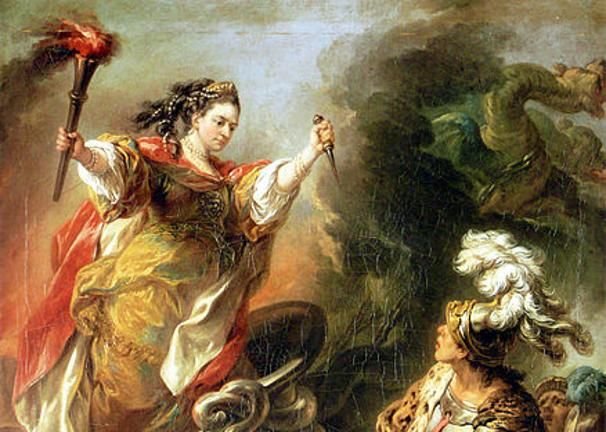
Medea is an ancient Greek play written by the playwright Euripides and was first performed in 431 BC. The play premiered during a pivotal moment in Greek history: the outbreak of the Peloponnesian War, a conflict between Athens—then at the height of its imperial power—and Sparta and its allies. Because of this timing, historians often interpret Medea as reflecting anxieties about imperialism, justice, and the treatment of foreigners within the Athenian empire.
In 431 BC, Athens controlled a wide-ranging maritime empire and dominated numerous allied states through military force. While Athenians celebrated democracy at home, many subject states viewed Athens as authoritarian.
- Woods Essay Week 6
Why was the Peloponnesian War fought? What was its long-term significance? and What points is Pericles trying to make about Athens in his Funeral Oration?
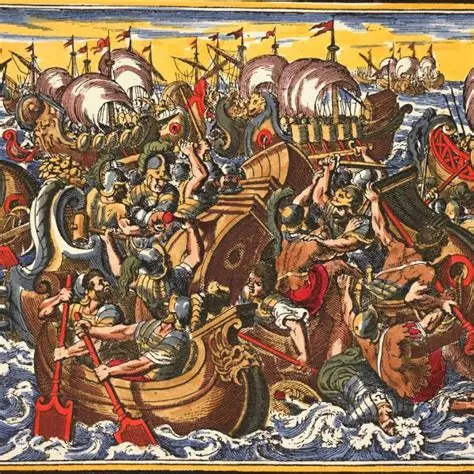
The Peloponnesian War was fought because, after the Persian Wars, Athens became powerful, using its navy to dominate its allies and build an empire. Sparta, fearing Athens’ growing influence, eventually decided to go to war.
The war ended with Sparta’s victory, but all of Greece was left weakened. It destroyed Athenian naval dominance, drained resources, and shattered unity among the Greek city-states.
In Pericles’ Funeral Oration, he praises Athens and its citizens. His speech serves as both a eulogy for the fallen and a celebration of Athenian democracy.
Some key points Pericles makes include:
- Athens is a model city, admired by others.
- Athens is a democracy, giving power to the people.
- Athenians advance based on ability and merit, not birth or social rank.
- Woods Essay Week 5
Aristotle’s Ethics explains how to live a good and fulfilling life. For Aristotle, the ultimate goal of life is happiness. This happiness is not just about feeling good, but about living well by becoming the best version of yourself. He argues that happiness comes from practicing virtue—good character traits such as courage, honesty, and generosity. Virtue, for Aristotle, is a balance between extremes, known as the Golden Mean. For example, courage is the balance between cowardice and recklessness.
- Woods Essay Week 4
My Opinion on:
1. What was the disagreement Socrates had with the Sophists?
2. What was Plato’s point in his allegory of the cave?
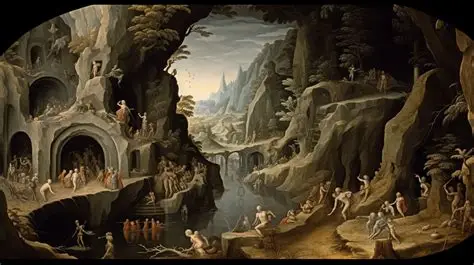
The Allegory of the Cave is a theory that if a group of people were chained from birth facing a cave wall, and the only thing they ever saw of the outside world were shadows projected onto it, they would believe that those shadows were the entire reality.
Plato’s point in the Allegory of the Cave was that most people believe only what they see. If someone has seen nothing but shadows their entire life, they will believe that shadows are all that exist.The disagreement Socrates had with the Sophists was that the Sophists believed truth is relative and that persuasion is most important, while Socrates believed truth is absolute, can be discovered through reason, and that knowledge should aim toward improvement and wisdom.
- Woods Essay Week 3
My opinion of if the Cyclopes Have a Civilization According to Homer’s description of the Cyclopes in Book 9 of The Odyssey, and What Happens Between the Cyclops and Odysseus and His Men.
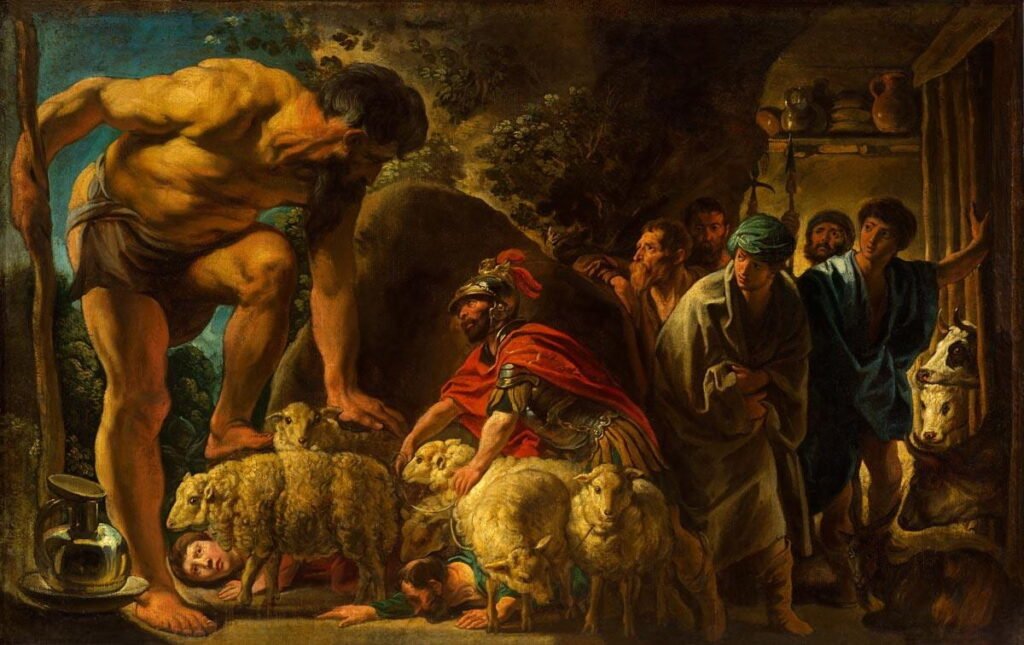
In my view, the Cyclopes cannot be considered a true civilization. Each Cyclops lives in isolation rather than as part of a community, and they lack the basic structures that define organized societies, such as laws, shared governance, and agriculture
Odysseus and his men discover an island and decide to explore. They find a cave that appears to be inhabited and wait for its owner, who turns out to be a Cyclops. When the Cyclops finds Odysseus and his men, he rolls a massive stone across the entrance to trap them inside and proceeds to eat two of the men. That night he goes to sleep, and the next morning he eats two more men before letting his sheep out to graze, rolling the stone back in place behind him. Odysseus devises a plan to escape: when the giant returns, he introduces himself as “Nobody” and offers the Cyclops wine. The giant drinks the wine, becomes drunk, and falls asleep. Odysseus then sharpens a stick, hardens it in the fire, and plunges it into the Cyclops’ eye. The blinded giant cries out, “Help! Nobody is attacking me!” so the other Cyclopes ignore him. In the morning, as the Cyclops lets his sheep out, Odysseus and his men hide underneath them and escape. Once they reach their ship, Odysseus, overcome with pride, reveals his true name, prompting the Cyclops to call upon Poseidon to curse him and his men.
- Woods Essay Week 2
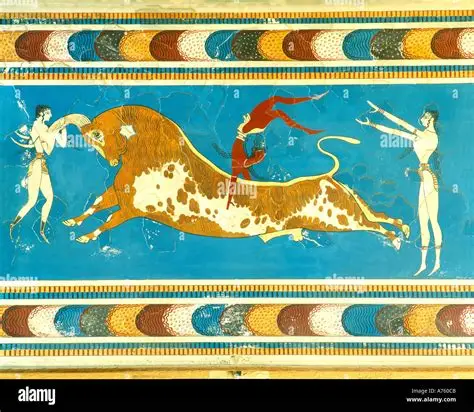
Bull jumping depiction from Minoan Crete
Summary of Hector in Book 6 of The Iliad
Hector is married to Andromache, and together they have a baby named Astyanax. During the war between the Trojans and the Greeks, Hector comes home from the battlefield and finds his brother Paris staying at the house. Hector convinces Paris to return to the fight, and they prepare to go back together. Before he leaves, Hector’s wife begs him to stay with her and their child, but he refuses, choosing his duty over family.
This shows that Hector is torn between love and duty, but ultimately chooses duty. He is also very brave and honorable, and he values his reputation and responsibility—maybe even too much.
Summary of Hector in Book 6 of The Iliad and Summary of the History of Minoan Crete
The Minoan civilization on the island of Crete began around 3000 BC and lasted until about 1100 BC. It is recognized as one of the first advanced civilizations in Europe, known for its large palace complexes and advanced plumbing systems. Minoan Crete was strongly based on trade, exchanging pottery, frescoes, wine, and other goods with places like Greece, Egypt, and the Near East.
The Minoans developed a written language called Linear A, which has not yet been fully deciphered. Their economy was centered around the palaces, where goods were collected and redistributed. Religion was very important, with many rituals, symbols, and depictions of bull-leaping, though the full meaning of these practices is still debated.
Minoan civilization reached its peak between 2000 and 1400 BC, but afterwards it declined, possibly due to natural disasters such as the Thera volcanic eruption and later invasions by the Mycenaeans from mainland Greece.
- Woods Essay Week 1
A brief overview of important events in Hebrew history from Abraham to Moses.
We start with Adam. God sees that Adam is lonely, so He creates Eve. Adam and Eve have two sons, Cain and Abel. Cain grows jealous because God favors Abel’s sacrifices, and in his anger, Cain murders Abel.
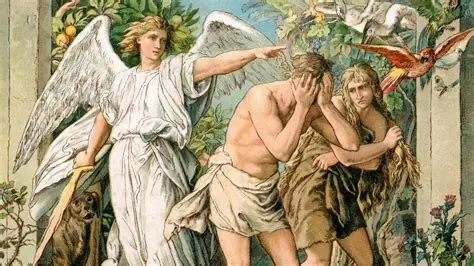
As time goes on, evil spreads across the world. God decides to send a great flood to cleanse it, but He tells Noah—the one righteous man—to build an ark. Noah and his family survive, and afterward God makes a covenant, promising never to destroy the world with a flood again.
Generations later, we meet Jacob. Jacob has many sons, but his favorite is Joseph, the son of his second wife, Rachel. Joseph has dreams that show he will rise above his brothers, which makes them jealous. Out of envy, they sell him into slavery. Joseph ends up in Egypt, sold to Potiphar. There, he’s falsely accused of pursuing Potiphar’s wife and thrown in prison.
While in prison, Joseph interprets dreams. Eventually, Pharaoh himself has troubling dreams, and Joseph is summoned. Joseph explains that the dreams warn of an upcoming famine, and Pharaoh elevates him to second-in-command over Egypt. When the famine strikes, Joseph’s brothers come seeking food. In a dramatic reunion, Joseph forgives them, and his family is saved.
Time passes, and a new Pharaoh arises who does not remember Joseph. Fearing the growing Hebrew people, he enslaves them and orders all newborn Hebrew boys to be killed. One mother hides her baby in a basket and sets him afloat in the Nile. Pharaoh’s daughter finds him and raises him as her own. The baby’s name is Moses.
As an adult, Moses sees an Egyptian overseer beating a Hebrew slave. In anger, Moses kills the overseer and flees into the wilderness. There, God speaks to him through a burning bush, telling him to return to Egypt and demand that Pharaoh release the Hebrews and lead them to the Promised Land.
Pharaoh refuses, so God sends ten plagues upon Egypt. At last, Pharaoh relents and lets the Hebrews go, but then he changes his mind and pursues them. God parts the Red Sea for His people, and the Egyptians are defeated.
Afterward, Moses goes up Mount Sinai, where God gives him the Ten Commandments. But when Moses returns, he finds the people worshipping a golden calf. In anger, he destroys the idol and calls the people back to faithfulness. With God’s guidance, they continue their journey toward the Promised Land.